Microsoft Word Accent Marks Mac
For users who do not have specialized keyboards, letters with accent marks may only be created using shortcut keys or through the menu bar.
Inserting accented letters with the menu bar or Ribbon
Nov 13, 2019 The Easiest Way to Type Accented Letters on a Mac If you have a Mac from 2011 (OS X 10.7, aka 'Lion') or later, you're in luck—it provides what may be the easiest way in computing today to type accented letters without using a keyboard made specifically for Spanish. The method uses the Mac's built-in spelling-correction software. Inserting accented letters with the menu bar or Ribbon. Open Microsoft Word. Select the Insert tab on the Ribbon or click Insert in the menu bar. On the Insert tab or the Insert drop-down, select the Symbol option. Select the desired accented character or symbol from the list of symbols. Acute accent marks, also called diacritical marks, slant to the right over the tops of certain vowels and consonants. They are used in Latin, Cyrillic, and Greek languages. English has incorporated countless Spanish, Italian, French, and Portuguese words, and many of their vowels take the accent mark. Insert Individual Accent Marks 1. Place your cursor where the accent mark should appear in the text. Select the Insert tab in the ribbon (see figure 1). Select Symbol in the Symbols group (see figure 2). Select More Symbols in the Symbol drop-down menu (see figure 3). Mar 19, 2020 To see what keys to press: Go to System Preferences Language & Text and select the Input Sources tab. At the top, enable Keyboard and Character.
- Open Microsoft Word.
- Select the Insert tab on the Ribbon or click Insert in the menu bar.
- On the Insert tab or the Insert drop-down, select the Symbol option.
- Select the desired accented character or symbol from the list of symbols. You can scroll through the entire list or select from the Subset drop-down list to view a specific type of symbols.
In Word 2003 and earlier versions, you can click the More Symbols option to see a larger list of available symbols to insert.
- After selecting the desired accented letter or symbol, click the Insert button.
If you insert an accented character using the steps above, once a character is inserted, you can copy that character and paste it anywhere else in the document.
Use keyboard shortcuts
Microsoft Word users can also utilize the following combinations of keys to add accent marks to their letters. For example, to get the à character, you'd press and hold the Ctrl key, and press the ` key (the tilde key). Then, release both keys and quickly press the A key.
NoteYou must press the letter key quickly after releasing the shortcut keys. Otherwise, the non-accented letter is created.
TipTo get uppercase accent letters, be sure to turn on Caps Lockbefore using the shortcut keys. Alternatively, after pressing the shortcut keys together, release all but the Shift key, then press the desired letter to create an uppercase accent letter. The Shift key option only works for those shortcuts utilizing the Shift key, as listed below.
| Desired Symbol | Shortcut Key Combination |
|---|---|
| à, è, ì, ò, ù, À, È, Ì, Ò, Ù | Ctrl+` (accent grave), the letter |
| á, é, í, ó, ú, ý, Á, É, Í, Ó, Ú, Ý | Ctrl+' (apostrophe), the letter |
| â, ê, î, ô, û, Â, Ê, Î, Ô, Û | Ctrl+Shift+^ (caret), the letter |
| ã, ñ, õ, Ã, Ñ, Õ | Ctrl+Shift+~ (tilde), the letter |
| ä, ë, ï, ö, ü, ÿ, Ä, Ë, Ï, Ö, Ü, Ÿ | Ctrl+Shift+: (colon), the letter |
| å, Å | [email protected] (At), a or A |
| æ, Æ | Ctrl+Shift+& (ampersand), a or A |
| œ, Œ | Ctrl+Shift+& (ampersand), o or O |
| ç, Ç | Ctrl+, (comma), c or C |
| ð, Ð | Ctrl+' (apostrophe), d or D |
| ø, Ø | Ctrl+/, o or O |
| ¿ | Alt+Ctrl+Shift+? |
| ¡ | Alt+Ctrl+Shift+! |
| ß | Ctrl+Shift+&, s |
Use third-party program
Additional information
- See the accent mark definition for further information and related links.
Suppose you're writing to an Italian friend, and you want to say something like Di dov’è la tua famiglia? (Where is your family from?), but you don’t know how to type the accent over the “e.” Many words in Italian need accent marks, and while you could just ignore all those symbols, it’s actually quite easy to type them on a computer keyboard.
You only need to make a few simple adjustments to your computer's keyboard program—whether you have a Mac or a PC—and you'll be able to insert accented Italian characters (è, é, ò, à, ù) for any electronic message.
If You Have a Mac
If you an Apple Macintosh computer, the steps for creating accent marks in Italian are quite simple.
Method 1:
To place an accent over:
Note: Most of the styles in Word are based on the Normal style. Changing the default font also changes the Normal style, which affects any other style that is built on the Normal style.Change the default character spacingChanging the default character spacing in any template means that the settings for scale, spacing, position, kerning, and other typographic features are used in every new document that is based on that template. For example, the character spacing for new blank documents is based on the Normal template.Open the template or a document based on the template whose default settings you want to change.On the Format menu, click Font, and then click the Advanced tab.Make any changes that you want, and then click Default.Change the default marginsChanging the default margins in any template means that the margin settings are used in every new document that is based on that template. 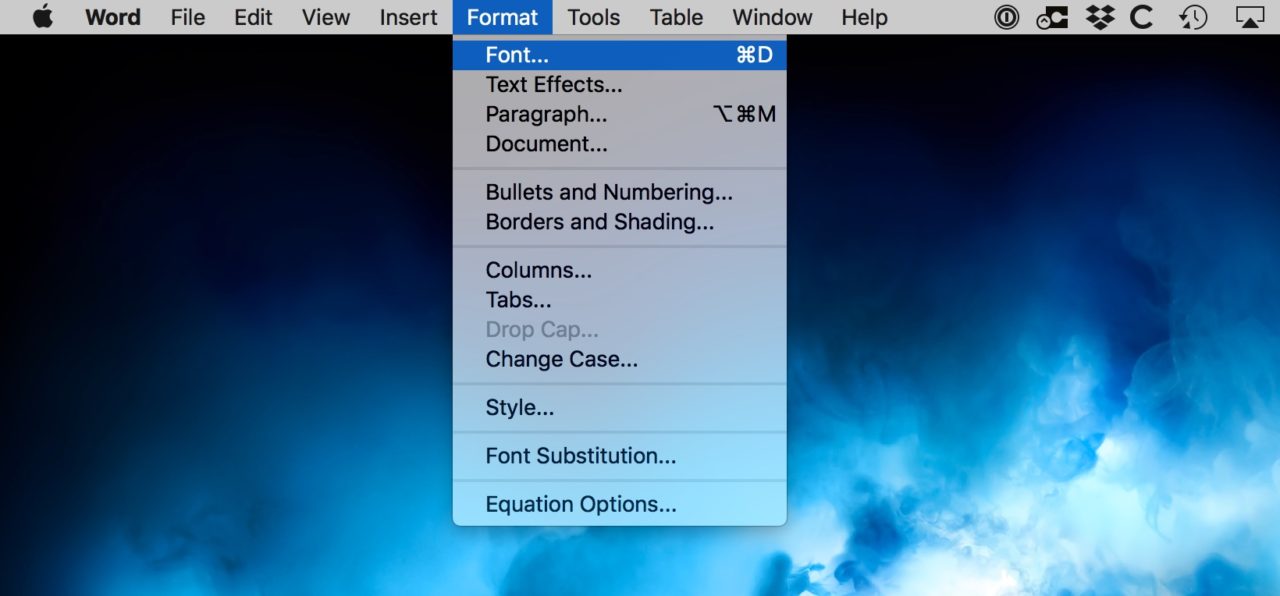
- à = option + tilde (~) / then press the ‘a’ key
- è = option + tilde (~) / then press the ‘e’ key
- é = option + ‘e’ key / then press the ‘e’ key again
- ò = option + tilde (~) / then press the ‘o’ key
- ù = option + tilde (~) / then press the ‘u’ key
Method 2:
- Click on the Apple icon on the top left of the screen.
- Click System Preferences.
- Choose 'Keyboard.'
- Choose 'Input Sources.'
- Click the add button on the bottom left of the screen.
- Choose 'Italian.'
- Click 'Add.'
- In the top right-hand corner of your desktop, click on the symbol of the American flag.
- Choose the Italian flag.
Your keyboard is now in Italian, but that means you have a whole new set of keys to learn.
- Semicolon key (;) = ò
- Apostrophe key (‘) = à
- Left bracket key ([) = è
- Shift + left bracket key ([) = é
- Backslash key () = ù
You can also choose 'Show Keyboard Viewer' from the flag icon drop-down to see all of the keys.
If you have a PC
Using Windows 10, you can actually turn your keyboard into a device that will type Italian letters, accent marks and all.
Method 1:
From the desktop:
- Choose 'Control Panels'
- Go to the Clock, Language, Region option.
- Select (click on) 'Add a Language'
- A screen with dozens of language options will appear. Choose 'Italian.'
Method 2:
- With the NumLock key on, hold down the ALT key and strike the three- or four-digit code sequence on the keypad for the desired characters. For example, to type à, the code would be “ALT + 0224.” There will be different codes for capitalized and lowercase letters.
- Release the ALT key and the accented letter will appear.
Consult the Italian Language Character Chart for the correct numbers.
Tips and Hints
An upper-pointing accent, as in the character á, is called l'accento acuto, while a downward-pointing accent, as in the character à, is called l'accento grave.
You may also see Italians using an apostrophe after the letter e instead of typing the accent above it. While this isn’t technically correct, it’s widely accepted, such as in the sentence: Lui e’ un uomo simpatico, which means, 'He’s a nice guy.'
Accent Marks
If you want to type without having to use codes or shortcuts, use a website, such as this one from Italian.typeit.org, a very handy free site that provides typing symbols in a variety of languages, including Italian. You simply click on the letters you want and then copy and paste what you've written onto a word-processing document or email.